
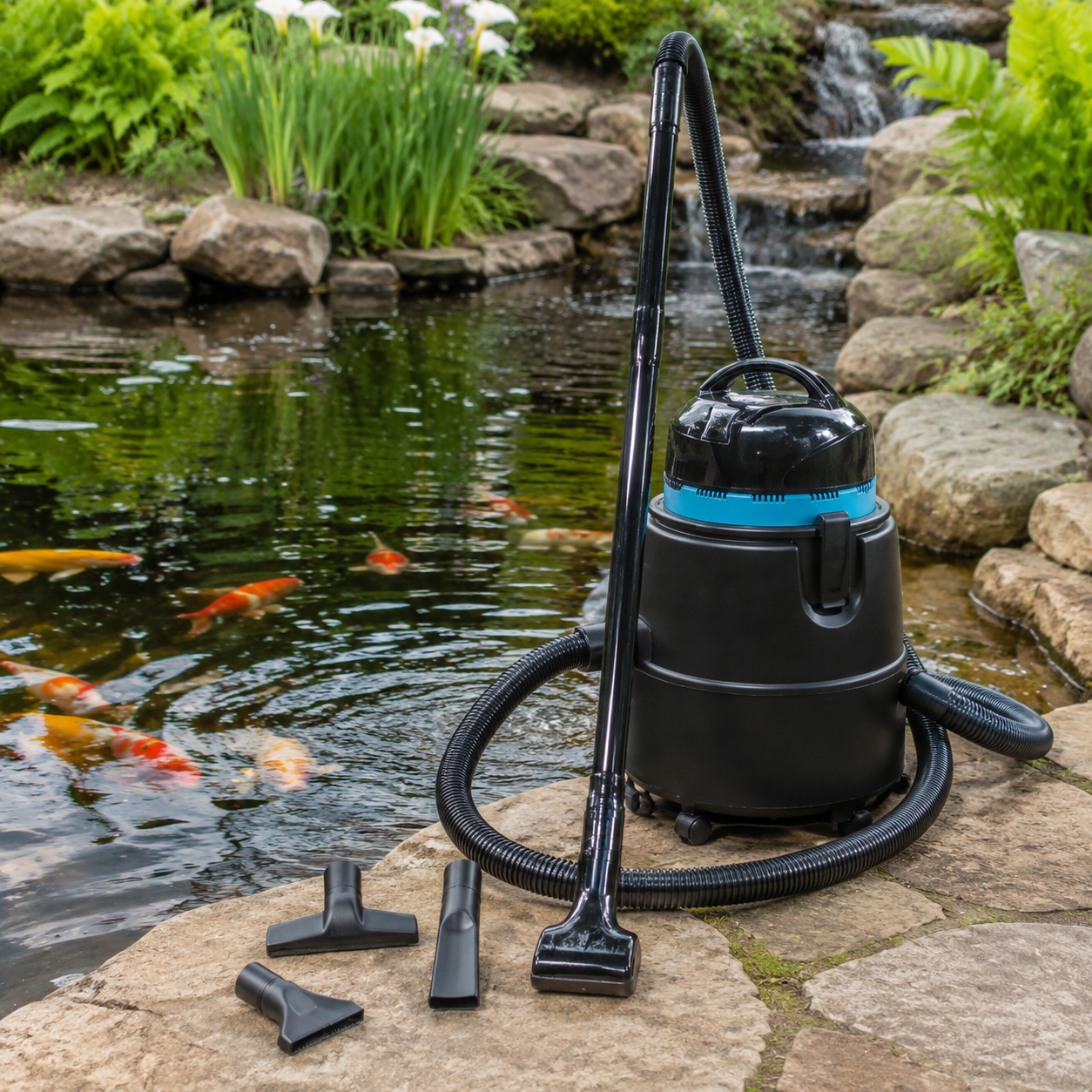
Pond Vacuum Cleaner — 1000W Wet & Dry Sludge Removal System
The accumulation of sludge on the pond floor is one of the most significant threats to fish health that many pond keepers overlook. This organic sediment — a combination of fish waste, decomposing plant matter, uneaten food, and algae — creates a toxic environment at the pond bottom, releasing hydrogen sulphide and ammonia while depleting oxygen. A powerful pond vacuum is the professional solution to this hidden problem.
The Sludge Problem Explained
In a natural lake or river, vast volumes of water and natural processes dilute and process organic waste. In a garden pond, waste accumulates faster than it can be naturally processed. The biological filter handles dissolved waste, but physical sludge on the pond floor requires mechanical removal. Without vacuuming, sludge layers grow year on year, reducing pond depth and water quality simultaneously.
Key Features
-
1000W Motor: Professional-grade suction power to lift heavy sludge and compact debris
-
Wet & Dry Function: Handles both liquid sludge and dry debris removal
-
Blowing Function: Reverse airflow for cleaning attachments and clearing blocked pipes
-
Large Capacity Tank: Reduces the number of emptying interruptions during cleaning
-
Multiple Attachments: Nozzles for different pond floor types and debris
-
Pump-Out Function: Discharges collected water directly to garden areas
Technical Specifications
| Specification |
Details |
| Motor Power |
1000W |
| Function |
Wet, Dry, Blow, Pump-out |
| Suitable For |
Sludge, algae, debris, pond floor cleaning |
| Applications |
Garden ponds, koi ponds, water features |
| Operation |
Mains powered |
Professional Cleaning Technique
For best results, vacuum your pond in sections, working methodically across the floor. Use the vacuum 4-6 hours after stirring the pond (not immediately, as disturbed sludge needs time to resettle). Never vacuum more than 20% of your pond's water volume in a single session — the discharged water contains beneficial nutrients and its sudden removal can stress fish. Replace vacuumed water with dechlorinated tap water gradually.
The blowing function is invaluable for clearing blockages in pond pipes and for backwashing certain filter types. Many keepers use the reverse airflow to clean filter brushes and foam blocks in conjunction with their regular water change.
Seasonal Maintenance Calendar
-
Spring (March-April): Major clean — remove winter sludge accumulation
-
Summer (June-August): Monthly maintenance vacuum, focus on feeding areas
-
Autumn (September-November): Pre-winter clean to reduce organic load
-
Winter: Minimal — avoid disturbing fish during cold periods
Fish Health Benefits
Regular pond vacuuming has direct, measurable benefits for fish health. Studies of koi pond management show that ponds with regular sludge removal have significantly lower incidences of bacterial infections, gill disease, and parasite outbreaks. The connection is straightforward: less sludge means less anaerobic bacterial activity, lower ammonia production, and higher dissolved oxygen levels at the pond floor — where koi feed and rest.
Free UK delivery. The professional approach to a clean, healthy pond.